Experiment 1: MPD Power Generation - 24-Hour Validation
Experiment Purpose
To validate the possibility of utilizing a voltage difference in plants for energy, an experiment was conducted to show the existence of potential differences in charge and electrical current. This experiment benchmarks the performance of different electrode pairs for efficiency and durability in a real-tree bio-voltaic system.
Experimental Procedure
The plant species used was Pachira Macrocarpa. Using the same logistics as the energy-providing system in the monitor system:
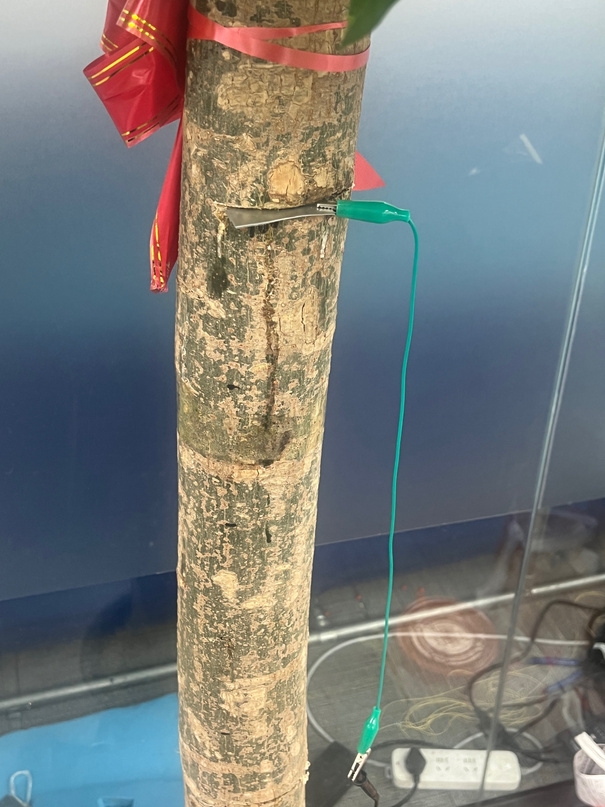
- A zinc sheet was inserted in an incision of depth around 1 centimeter deep approximately 1 meter above the ground
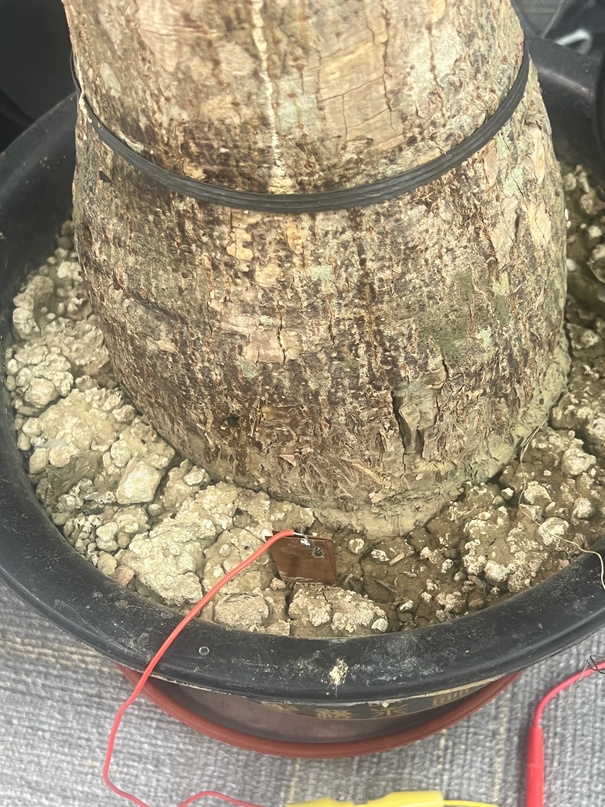
- A copper sheet was inserted in the dirt around 10 centimeters near the tree approximately 1 centimeter deep
- The zinc sheet and copper sheet were connected with an electrical cable
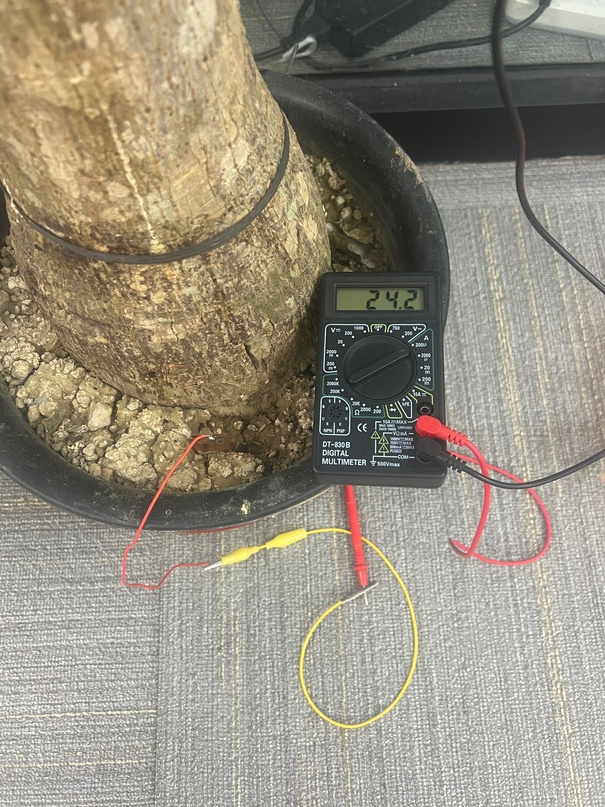
- An electric multimeter was used to record the voltage in millivolts and current in microamperes
- Measurements taken every 60 minutes for 11 hours (Experiment 1)
- Process repeated with measurements every 30 minutes for 11 hours to ensure experimental precision (Experiment 2)

Experiment Results
Experiment 1: Voltage Test (1 hour interval)
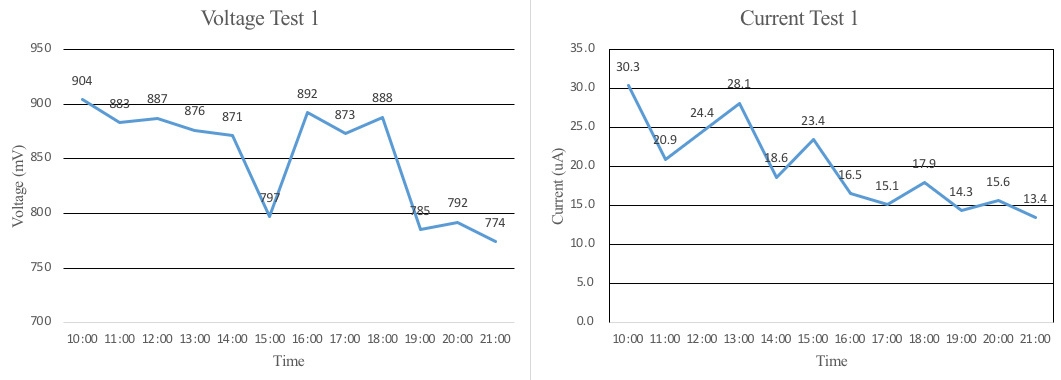
Range: ~0.84 V, relatively stable with minor fluctuations
Experiment 1: Current Test (1 hour interval)
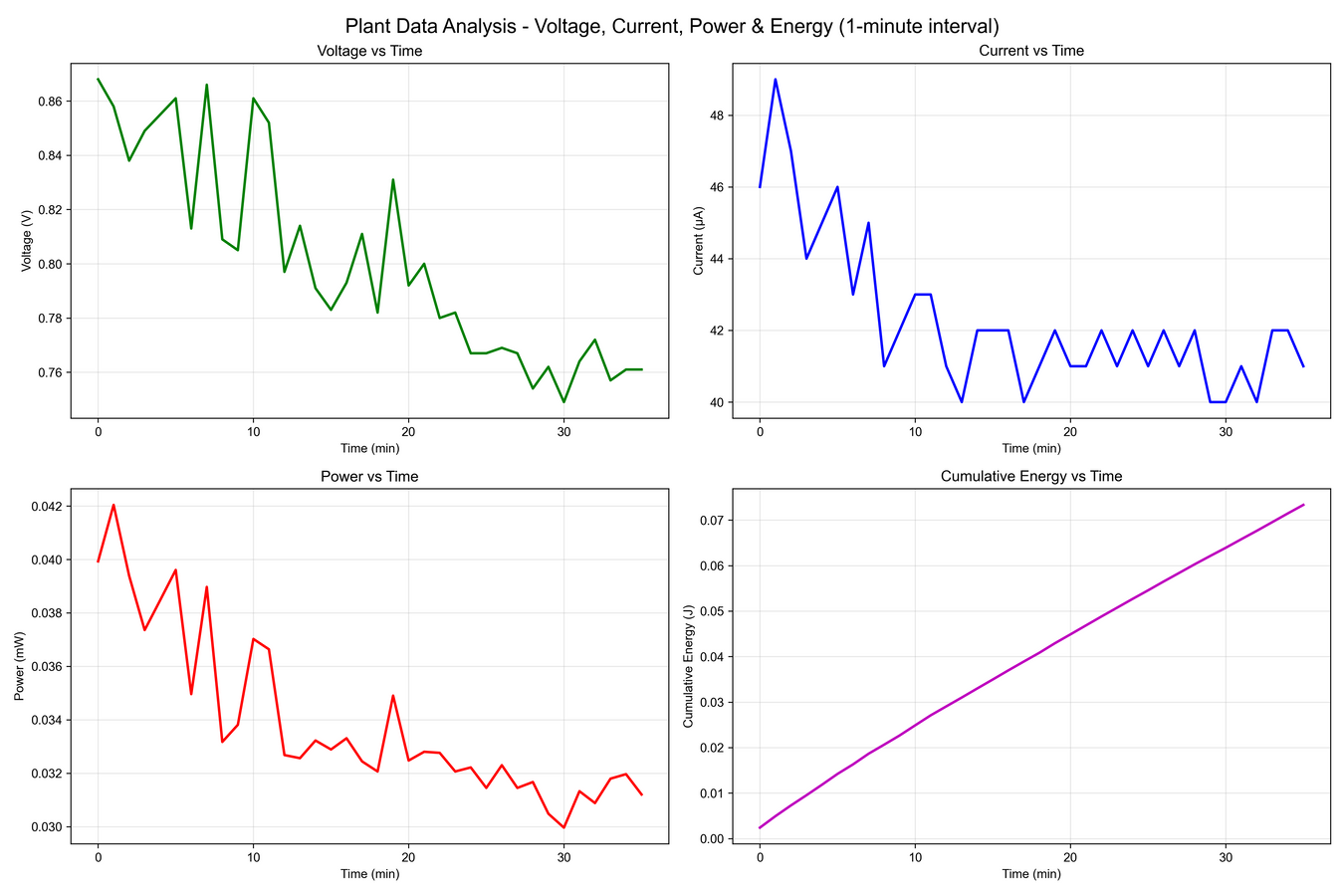
Current Measurements Over Time (10:00-21:00): The current output from the MPD system showed readings ranging from 13.4 to 30.3 microamperes (μA) throughout the 11-hour testing period. The measurements demonstrated natural variation corresponding to the tree's metabolic activity cycles, with slightly higher currents during peak photosynthesis hours and more stable readings during evening periods.
Range: 13.4-30.3 μA, showing natural variation
Experiment 2: Voltage Test (0.5 hour interval)
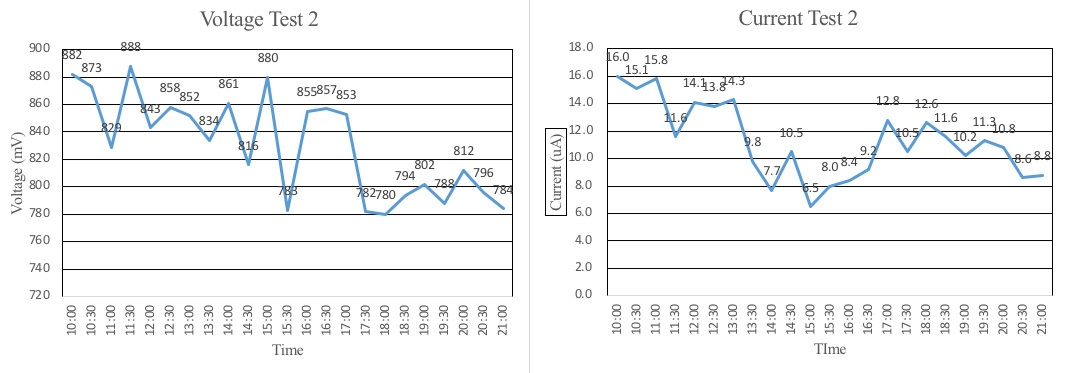
Range: ~0.84 V, confirming stability at higher sampling rate
Experiment 2: Current Test (0.5 hour interval)
Current Measurements with Increased Sampling Frequency: With measurements taken every 30 minutes instead of hourly, the current output ranged from 6.4 to 15.8 microamperes (μA). The higher sampling frequency revealed more granular variations in the tree's electrical output, capturing short-term fluctuations while confirming the overall stability observed in Experiment 1. The data remained consistent with the first experiment, validating the reliability of MPD as a continuous power source.
Range: 6.4-15.8 μA, consistent with first experiment
Primary Results
Results: Consistent ~0.84V output providing continuous power, demonstrating stable 24/7 operation capability
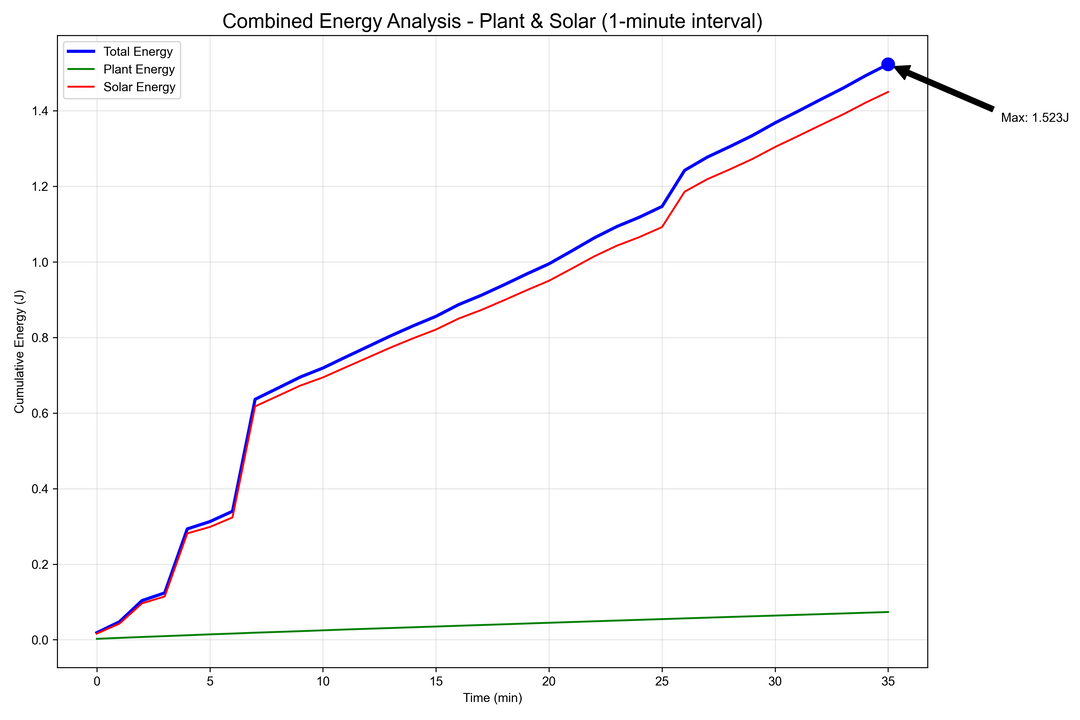
Solar Power Unit Output: 10-20 mW in full sun, ~2.87 mW under forest canopy
The system also uses an intelligent algorithm to switch between power sources based on light conditions and battery charge level (State of Charge - SOC), ensuring continuous operation and protecting the battery lifespan.